
Modular Belt Conveyor Systems: The Definitive Engineering Guide to High-Speed Material Handling
A comprehensive technical guide on selecting belt pitches, flight cleats, food-grade POM materials, and variable frequency drives for robust automated conveying.
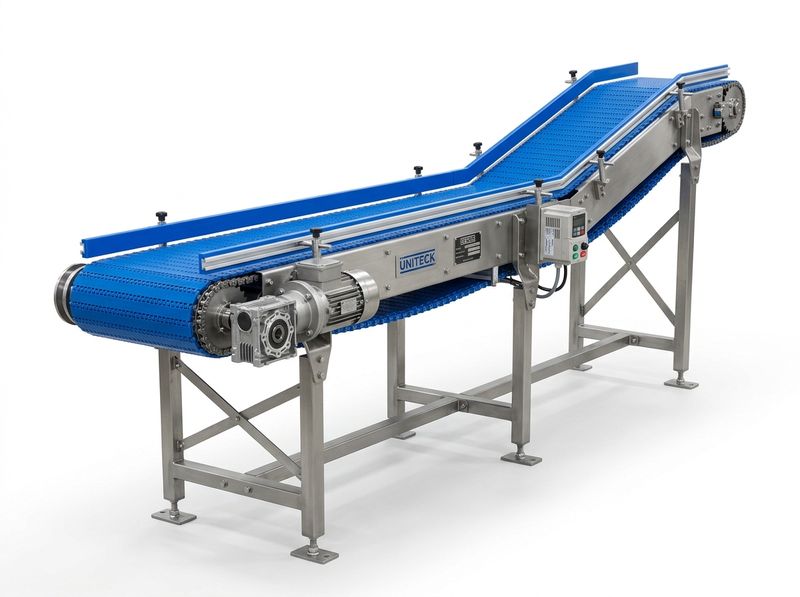
Introduction to Plastic Modular Belting
Unlike traditional continuous rubber or PVC fabric belts that are susceptible to edge fraying, mistracking, and high tensioning stresses, plastic modular belt conveyors utilize interlocking thermoplastic modules hinged with polymer rods.
This positive-drive sprocket mechanism guarantees zero belt slippage, eliminates tracking drift, and withstands harsh washdowns with aggressive CIP chemicals.
Key Material Selection Matrix
- Polypropylene (PP): Ideal for ambient to hot applications (up to 100°C), superior resistance to chemical acids and alkalis.
- Polyoxymethylene (POM / Acetal): Outstanding tensile strength, ultra-low friction coefficient, high abrasion resistance, and ideal for heavy accumulator lines.
- Polyethylene (PE): Superior cryogenic impact resistance down to -70°C, predominantly specified in IQF blast freezing tunnels.
Drive & Tensioning Calculations
Proper sprocket pitch diameter and shaft deflection calculations are essential. For a typical heavy-duty 400mm width conveyor:
- Square Shaft Size: 40mm stainless steel 304 or 316.
- Sprocket Tooth Count: 16 to 21 teeth recommended to minimize chordal action and belt vibration at higher speeds.
- Drive Motor: Three-phase asynchronous geared motor paired with a vector control VFD for smooth acceleration ramps.
Maintenance and Wear Life
Modular belts allow damaged modules to be swapped individually in under 5 minutes without dismounting the entire belt loop. BizBein conveyors feature quick-clean hygienic lift-up guides that allow rapid cleaning under the return run.